By Marty Maughan
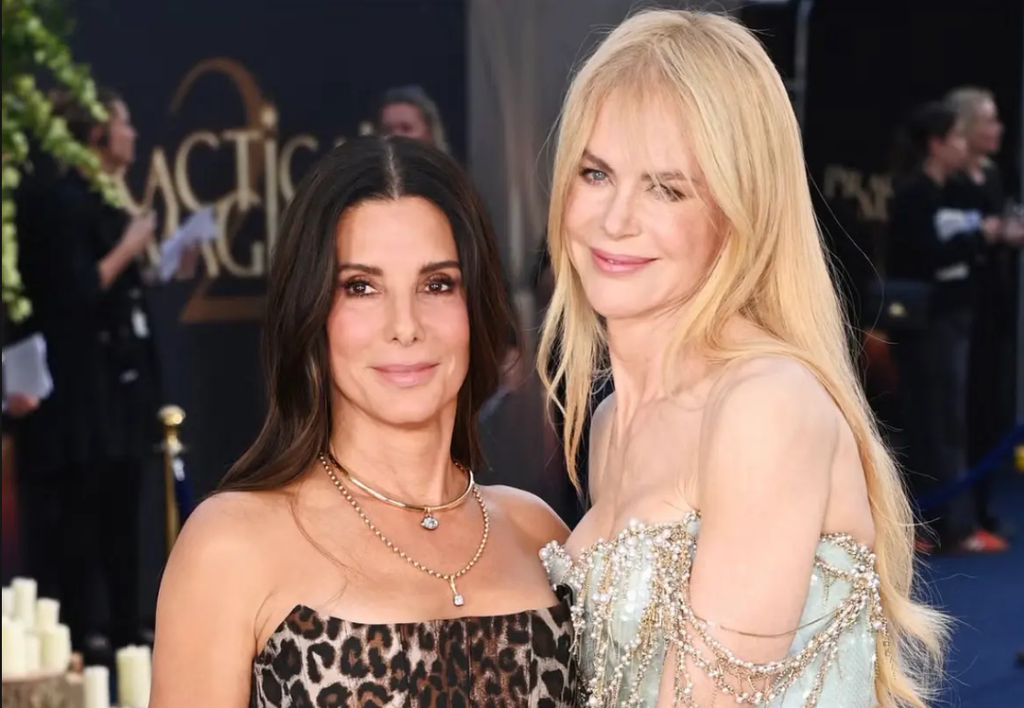
The return of ‘Practical Magic’ starring Nicole Kidman and Sandra Bullock started
controversy regarding the rise of Botox, fillers and cosmetic procedures as industry
norms. Do women’s faces dictate their career?
It has been a long-standing belief in Hollywood that a woman’s youth is celebrated while her
inevitable ageing is seen as her demise. Just recently, Megan Fox has received scrutiny
online when videos of her recent interviews were lined up with photos of her from her 20s,
with captions criticising the fact that she no longer looks the same at 40 due to ageing and
cosmetic procedures. Similarly, Nicole Kidman and Sandra Bullock received criticism during
the promotional run for Practical Magic 2, with the pair’s faces being described as “static”
due to Botox.
The media have pushed the narrative that women have a clear expiration date. In the
modelling industry, youth is often the money maker. Best Agencies describes the typical age
of high fashion models to be 16-21, which is remarkably young. Model Natalia Vodianova, at
only 19, was seen as an exception in the industry for continuing to book runway work after
having children. In a roundtable for The Hollywood Reporter, actress Naomi Watts recalled
being told by an unnamed figure in Hollywood that “It’s gonna be over by forty, so work,
work, work.”
Linda Evangelista was a notable model in the 90s, famously telling Vogue magazine that “I
won’t get out of bed for less than $10,000 a day,” in a 1990 interview. However, a decade
later, the calls stopped coming, and the money stopped flowing in for one reason: she aged.
The scrutiny brought to Evangelista from ageing led to the supermodel getting a
body-contouring treatment that she alleges left her “brutally disfigured.” Are these the
lengths women must go to in order to please the public eye? If they age naturally, they’re
scrutinised, and if they use cosmetics to mask their ageing, they’re scrutinised. Do we hold
men to the same standards?
A notable double standard was in an interview with TheWrap, when 37-year-old Maggie
Gyllenhaal revealed she was rejected from a movie role for being “too old” to play the love
interest of a 55-year-old man. Men in Hollywood are celebrated for ageing, their maturity
being seen as an asset for their appeal rather than a liability. At the 2025 Met Gala, Pamela
Anderson, 57, was called “frumpy” by a tabloid when she embraced her natural beauty on
the red carpet. In contrast, Patrick Dempsey was named “Sexiest Man Alive” by People
when he was 57. While Dior wanted 25-year-old Cara Delevingne to be the face of an
anti-ageing campaign, George Clooney was the face of a luxury watch campaign at 61.
“People say, ‘Oh, you were so brave for this role; you didn’t wear any makeup. You have
wrinkles.’ Do we say to the men, ‘Oh, you were so brave for this role, you grew a beard?’ No,
we don’t.” – Kate Winslet for 60 Minutes.
Of course, there are exceptions, such as Carmen Dell’Orefice, the oldest working
supermodel at 93. Or roles depicting confident older women in the media, such as Miranda
Priestly, played by Meryl Streep in The Devil Wears Prada. However, these cases are, as I
mentioned, just exceptions to the standard, not the norm. An unretouched photo of
49-year-old Cindy Crawford was leaked in 2013, showing the natural wrinkles on her body.
People saw this photo as inspirational, solely for the fact that it wasn’t airbrushed to make
Crawford look 20. Why must women in Hollywood have so much pressure on them to
appear young that it’s seen as a risk to allow the public to see them age?
The press can tell women how brave they are for simply existing authentically past their 30s,
which is positive, but true acceptance for women ageing will only occur when it’s no longer
brave; it’s just normal.