By Saoirse MacCarthy
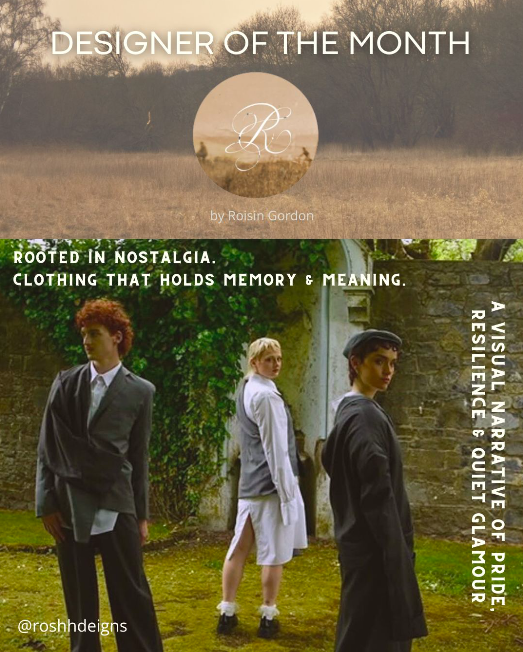
Inspired by the hardworking life of her 91-year-old Grandfather, an early school leaver and Glasgow shipyard blacksmith, Róisín Gordan draws on family photographs and research to reimagine vintage clothing. Deconstructing workwear and traditional tailoring that honour heritage, gender and the working-class tradition of wearing your Sunday Best.
Róisín’s creativity was nurtured as a child; her mother encouraged her to cultivate her own identity and dress in a way that suited her. Trips to the local shop were a chance for adolescent Róisín to experiment, “Barbie outfits, welly boots, stripy tights, the most random things.” These early signs that Róisín would use clothing to rebel were clear, “I think from being so young and being able to, like, wear what I want, be creative, definitely had an impact when I got older,” as was her love for art “I would do painting classes and things like that. When I knew going into secondary school, I would do art. I didn’t know specifically fashion at that stage.” As she grew into a teen, her fashion sense conformed to the ‘teenage uniform’, “I’m from a really small town, it was, a lot of pressure to, wear the same as everyone else and just fall into [the norm]. I did, my creativity definitely went down in secondary school.”
It was not until Róisín went to the Limerick College of Art and Design (LSAD) that she would completely rediscover her creative expression. While visiting the college, she had a gut instinct that LSAD was where she was meant to be, “I was like, oh, my God, I have to be here. I have to go here.” Róisín followed her childhood instincts “Still didn’t know I wanted fashion, though, until my first year in college. We obviously had to choose. And I think it was always at the back of my mind, like, that I wanted to do it, especially because I, like, just loved clothes and loved styling different things.” LSAD was an opportunity for Róisín to style, experiment and rediscover confidence. It was the safe space needed to discover her individuality through her designs and examine family history in a new light.
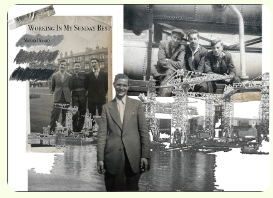
Róisín’s Scottish heritage influenced her Graduate Showcase, “Working in My Sunday Best”. She grew up often visiting her Glaswegian Grandfather, and looking through old photographs, which shaped her understanding of his life. “I remember going to his house and looking through all his old photographs. And they just struck me. It was just so crazy to think – looking at this old, frail man and thinking of him so bright and so stylish, so handsome, when he was younger.” Róisín has always had an interest in vintage styles and music, especially when listening to her grandfather’s old folk albums; she realised how drastically the culture has changed. Her grandfather left school early and began a career of backbreaking labour at Glasgow’s shipyards. Although he was a working man, as was customary at the time, he would proudly dress in his finest clothing every Sunday for mass.
“That’s what I like to contrast, his workwear and his good wear. He’s my title for my collection, ‘working in his Sunday best.’ And the fact that, like, he would still – after so long of working hard shifts, he’d still dress up in his suit. Even going for a coffee, anywhere, leaving the house, he was fully dressed to the best. So, that’s what really inspired me.”
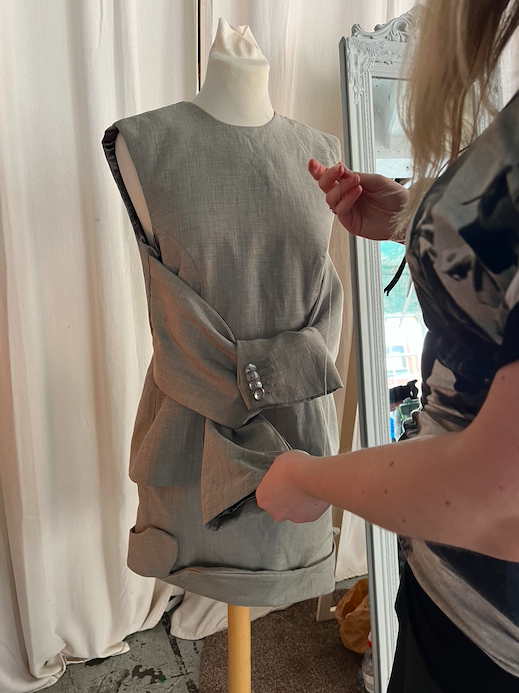
The graduate collection was inspired by men’s wear, but it only had one men’s wear look. For Dublin Independent Fashion Week’s show Tógála, Róisín created a unisex collection, “men could wear one or two of the outfits… It’s like a genderless item of clothing.” During her time at LSAD, the students mainly focused on women’s wear. Róisín said she taught herself most of what she knows for the creation of men’s wear. Róisín has blended classic male silhouettes with female designs, creating a dress from a deconstructed blazer.
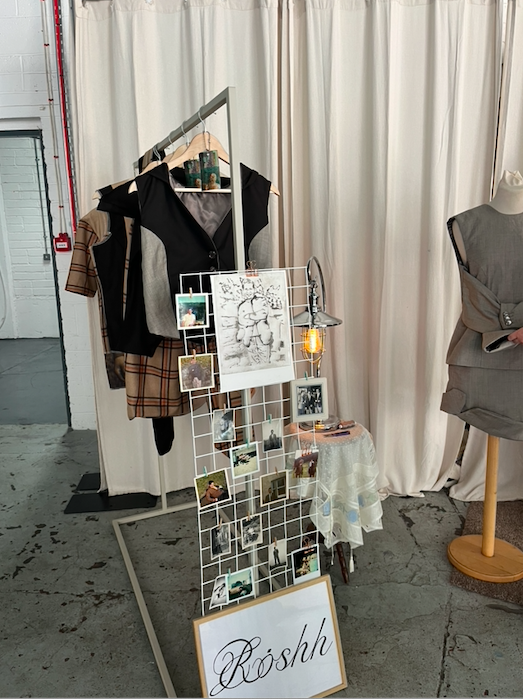
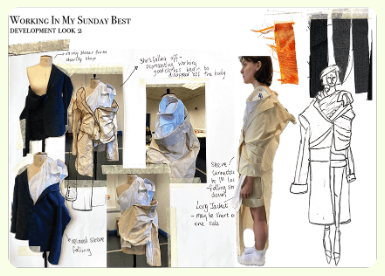
Róisín’s design process is unique; unlike how she was taught, she doesn’t start with a drawing, but by draping the fabric on the mannequin and looking back on old photographs.
“I look at what we already have, like, i.e. a blazer. And I put on the mannequin, I drape it, take pictures of it. The collage is a large aspect of my work. Cutting out things, looking at my granddad’s old photos, photocopying them, cutting them out, seeing where they could play different ways. Once I find something I like, I go with that. I never have a full-blown design in my head.”
Now based in London, Róisín nurtures her label, alongside hospitality work, navigating the harsh realities of an emerging designer, creating while supporting herself. Her ambition is rooted not in spectacle, but in sustainability, with hopes of establishing a made-to-order studio that champions craftmanship, timelessness and storytelling. For Róisín, fashion is not about excess, but intention. Through her designs, she honours a generation that dressed with pride despite hardship, reminding us that function and beauty were never mutually exclusive.
By reworking workwear and tailoring through a personal lens, Róisín positions herself as a designer who understands clothing as both object and archive. “Working in His Sunday Best” was not simply a collection, but the foundation of a design language shaped by memory, labour and pride. One that honours the past while constructing a thoughtful future.